Rainplan claimed the $3,240 rebate, matched the installer and sponsored the build, with oversight through completion.
Your city or utility may pay for upgrades that capture rain, manage runoff or save water. We can find the money, file the claim, plan the project and help you get it built. Start with your address.
No cost to look. See what your property qualifies for in seconds.
Homes, buildings and parking lots. Pick the one that sounds like you and we'll show you what your city pays to fix it.
StormwaterHard surfaces send rain into the street and the storm system. Many counties pay to replace them with surfaces that let it soak in.
Parking lotA big paved lot sends its rain straight to the storm drain, so many cities pay to rebuild it with permeable stalls and planted islands. In DC, qualifying lots can be fully funded through Stormwater Retention Credits.
Water billIf outdoor watering is driving the bill, utilities in dry places pay by the square foot to swap thirsty grass for plants built for your climate.
Stormwater feeThe fee is charged on roofs and pavement, so the bigger the lot, the bigger the bill. Rain gardens, permeable paving and green roofs can earn a discount, and programs pay toward the work.
Already plannedThen it is worth checking what your program pays before you sign. The design and the program's requirements have to line up, and that is the part we handle.
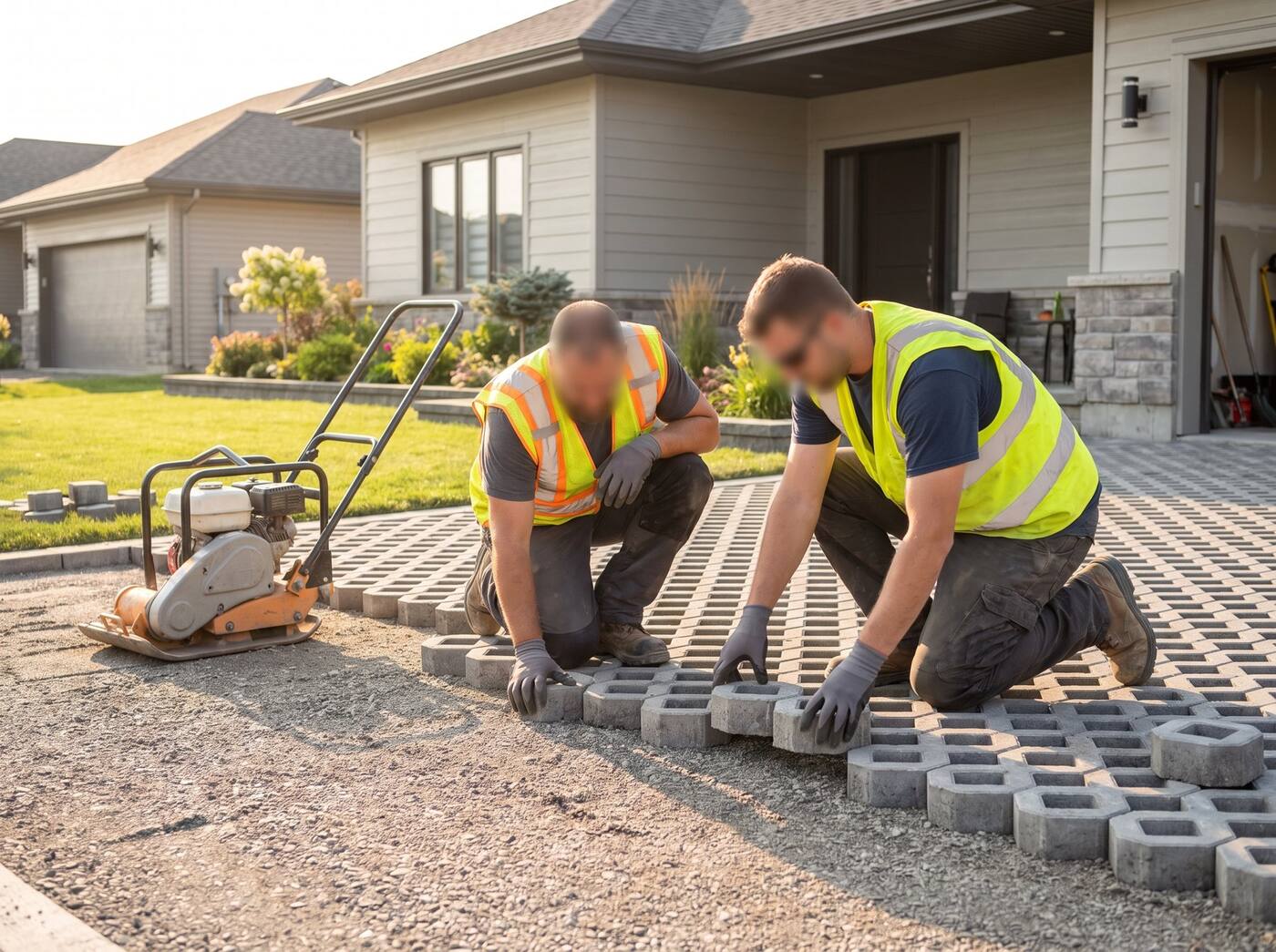
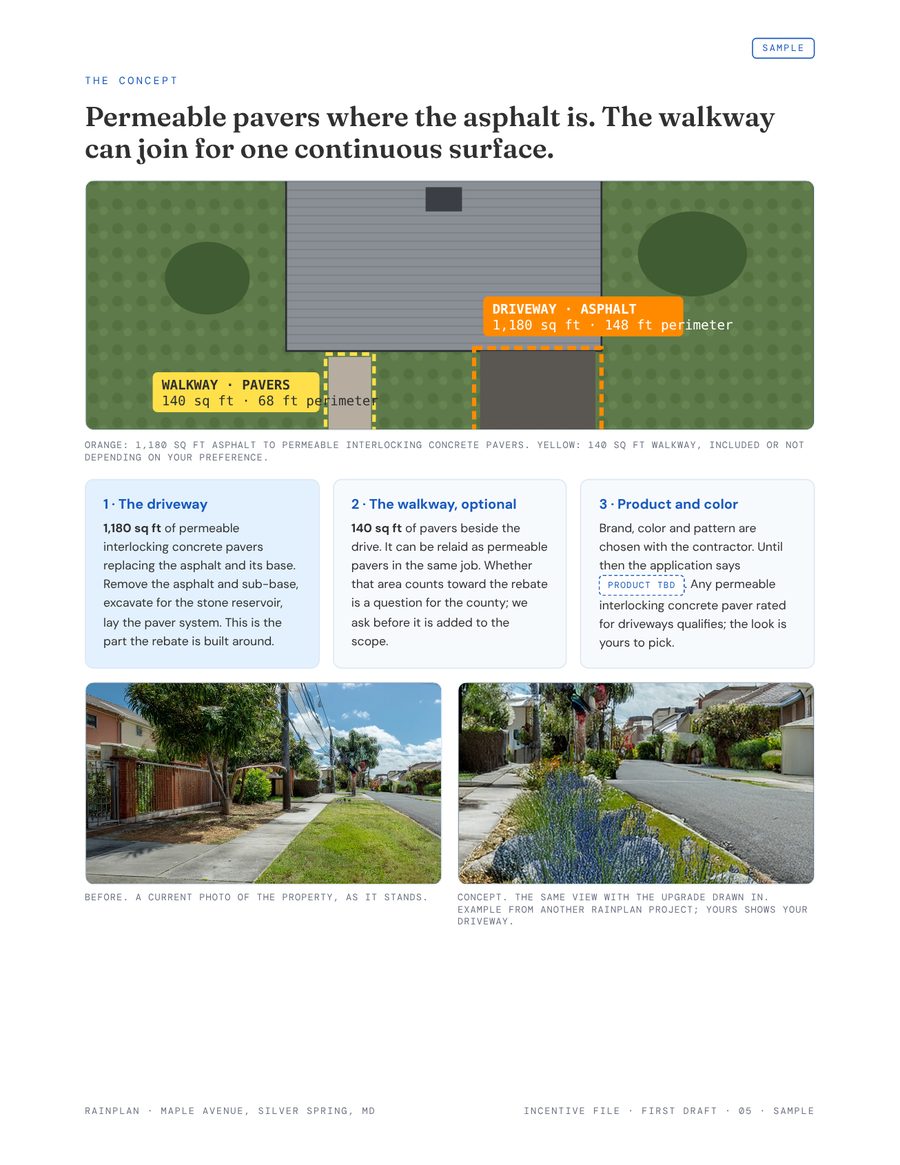
Already plannedBefore you sign for new asphalt, see what your program pays to make part of it permeable. Rainplan can plan it to the program's rules, so every contractor bids on a plan that qualifies.
StormwaterOften it starts outside: where the downspouts go and how the yard slopes. Rainplan can plan the drainage fix and check what your program pays toward it.
Parking lotPermeable pavers let rain through every stall into a stone base below, so water stops sheeting into the street. In DC, qualifying lots can be fully funded through Stormwater Retention Credits.
DroughtSwap the thirsty parts for plants built for your climate. Utilities across the West pay by the square foot to take grass out, and the yard looks better in August than it ever did.
Water billOffice parks, HOAs and campuses water acres of grass. Utilities in dry places pay by the square foot to replace it with native plants built for the climate, and the water bill comes down with it.
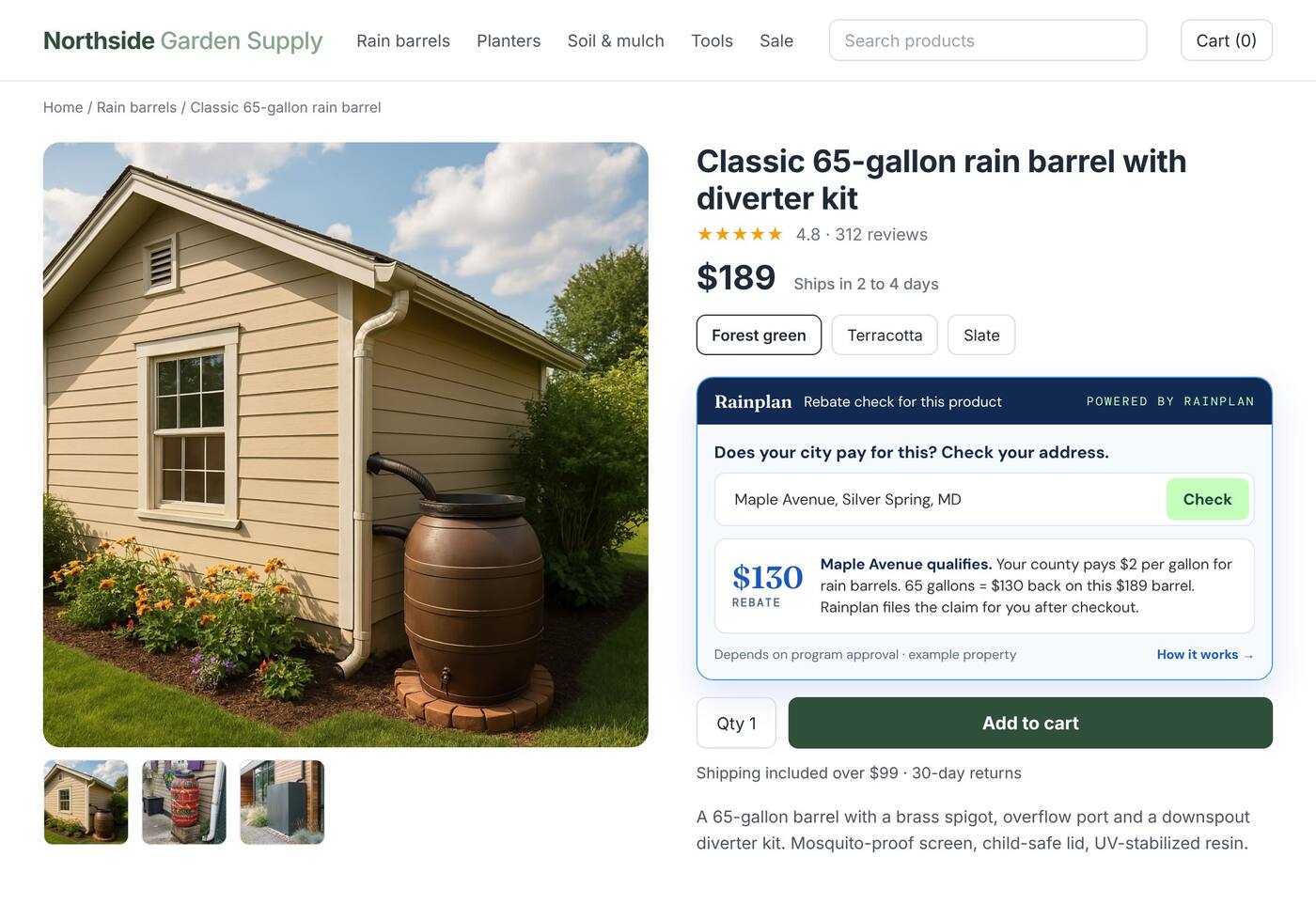
Water billA barrel on the downspout or a tank beside the house. Many programs cover most or all of a barrel.
NonprofitHouses of worship often have the biggest paved lot on the block. Many programs welcome nonprofits, and in DC qualifying sites can be fully funded through Stormwater Retention Credits.
YardMowing, watering, fertilizing. A native yard costs less to keep and programs pay to plant it.
Parking lotWater that pools in a lot freezes in the first cold snap. Planted swales and permeable stalls take it in where it lands, and many programs pay toward the work.
StormwaterRedirecting downspouts into a rain garden or a rain barrel keeps roof water away from the house and out of the storm drain. Many programs pay toward both.
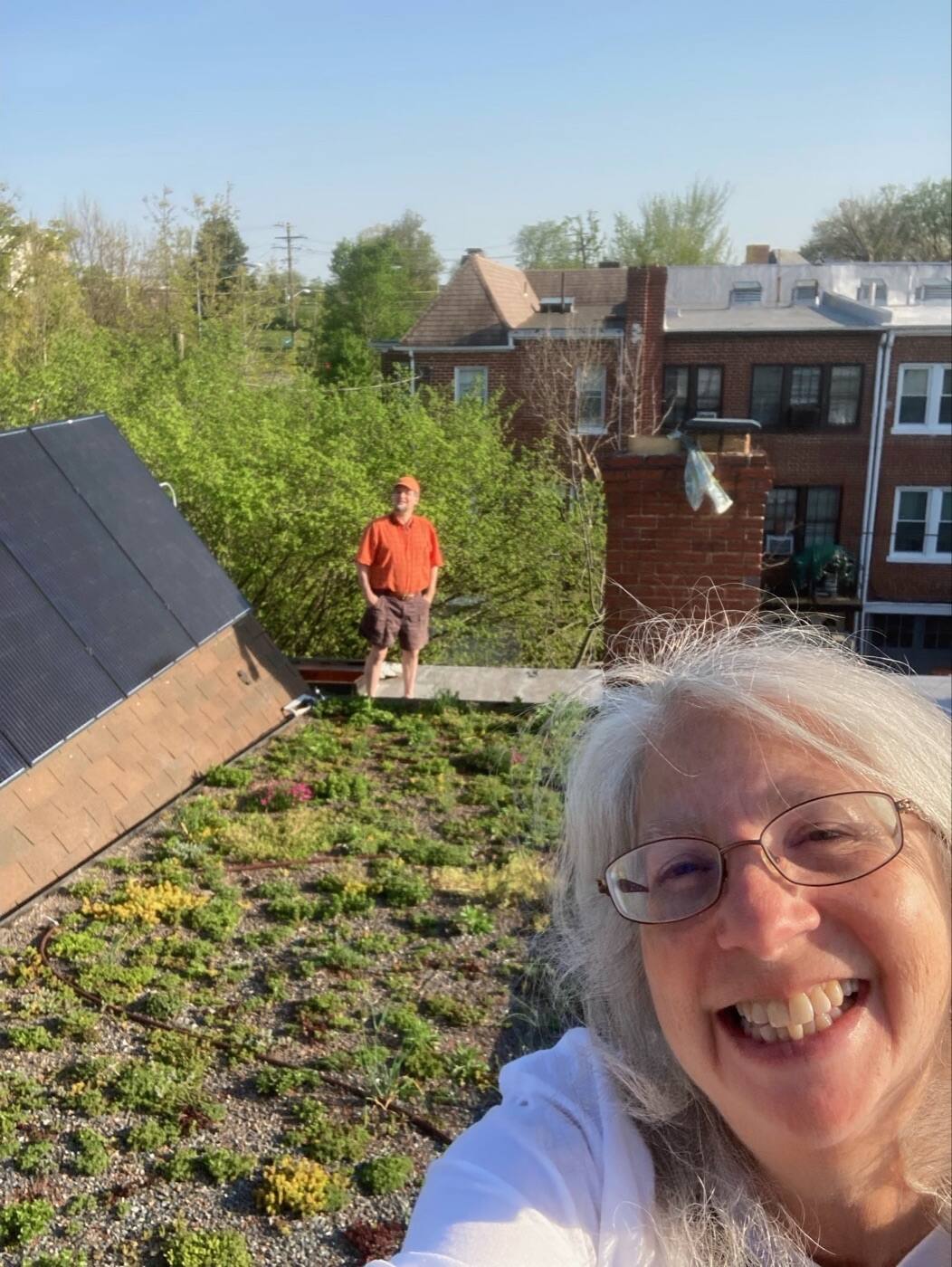
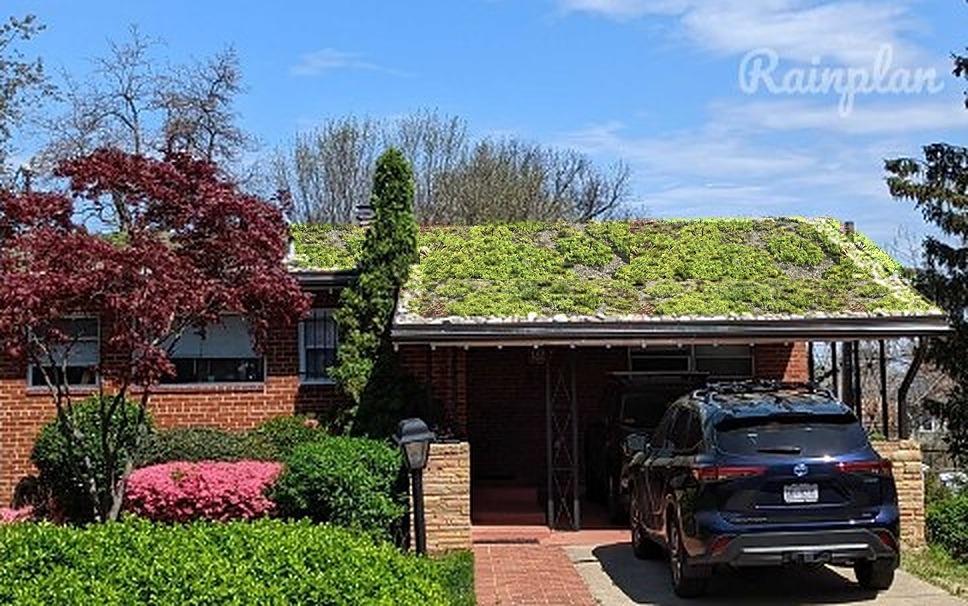
RoofWhen the roof is coming off anyway, that's the best time to plant it. Programs pay by the square foot for green roofs, and a planted roof can cut the stormwater fee.
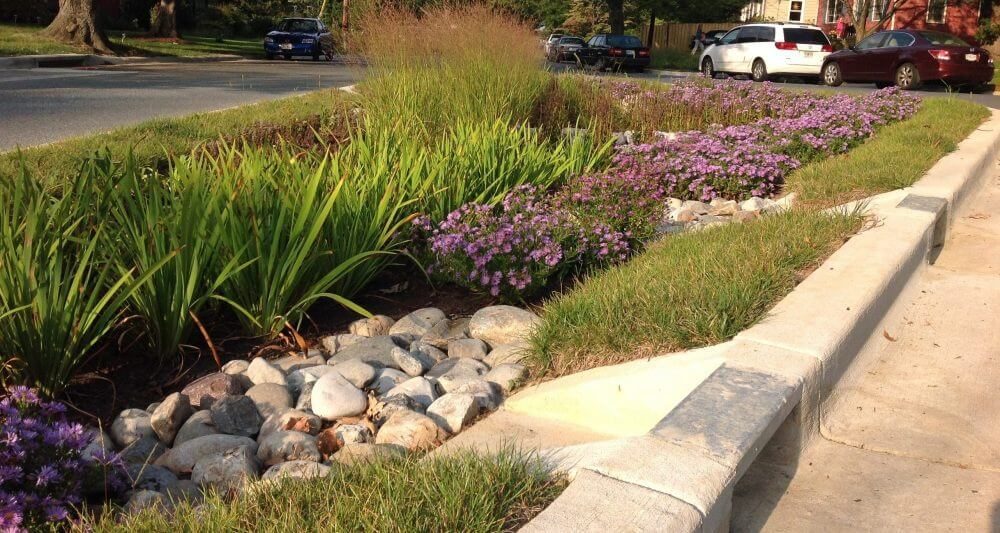
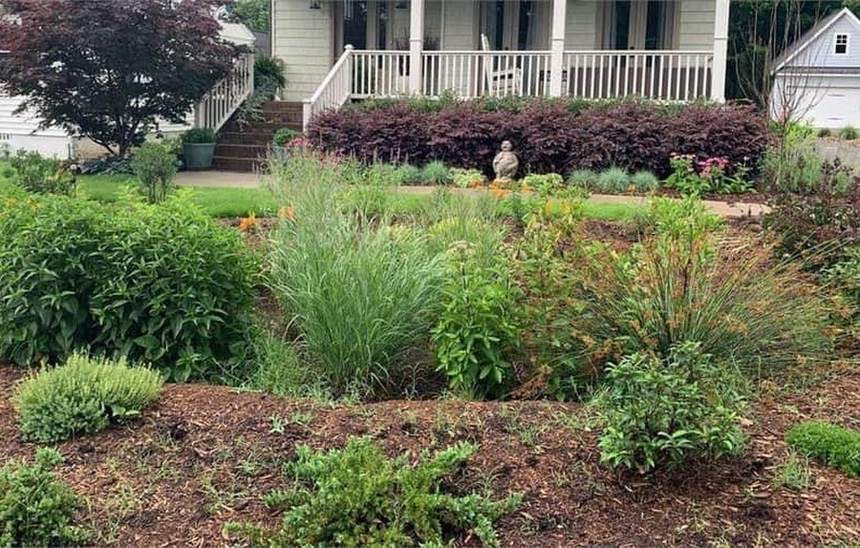
YardThe right fix depends on how water moves across your lot. A rain garden is often it, and the program pays for the plants and the digging.
HOAMany programs accept HOAs and co-ops for shared ground. A rain garden or native planting on the common slope stops the washout, and the program can pay toward it.
PatioPermeable pavers look better, drain on their own, and most stormwater programs pay by the square foot to install them.
UndergroundThen the storage goes underneath. Chambers under the lot hold a storm's runoff and let it soak in slowly, with the parking back on top. In DC, it can earn Stormwater Retention Credits.
RoofA planted roof holds rain, cools the building and lasts longer than the membrane under it. Cities pay by the square foot.
IndustrialA warehouse roof and truck court shed a lot of rain. Swales and permeable employee parking can earn program money, and a fee discount where the city offers one.
YardMulch in the street and gullies in the lawn mean the water is moving too fast. Terraces, rain gardens and deep-rooted native plants slow it down, and many programs pay toward them.
FiltrationBioretention basins and filtration systems run a whole site's runoff through soil, sand and roots before it leaves the property. Many programs pay toward the work.
TreesA shade tree catches rain before it reaches the ground and cools the house in summer. Many cities and utilities pay toward planting one.
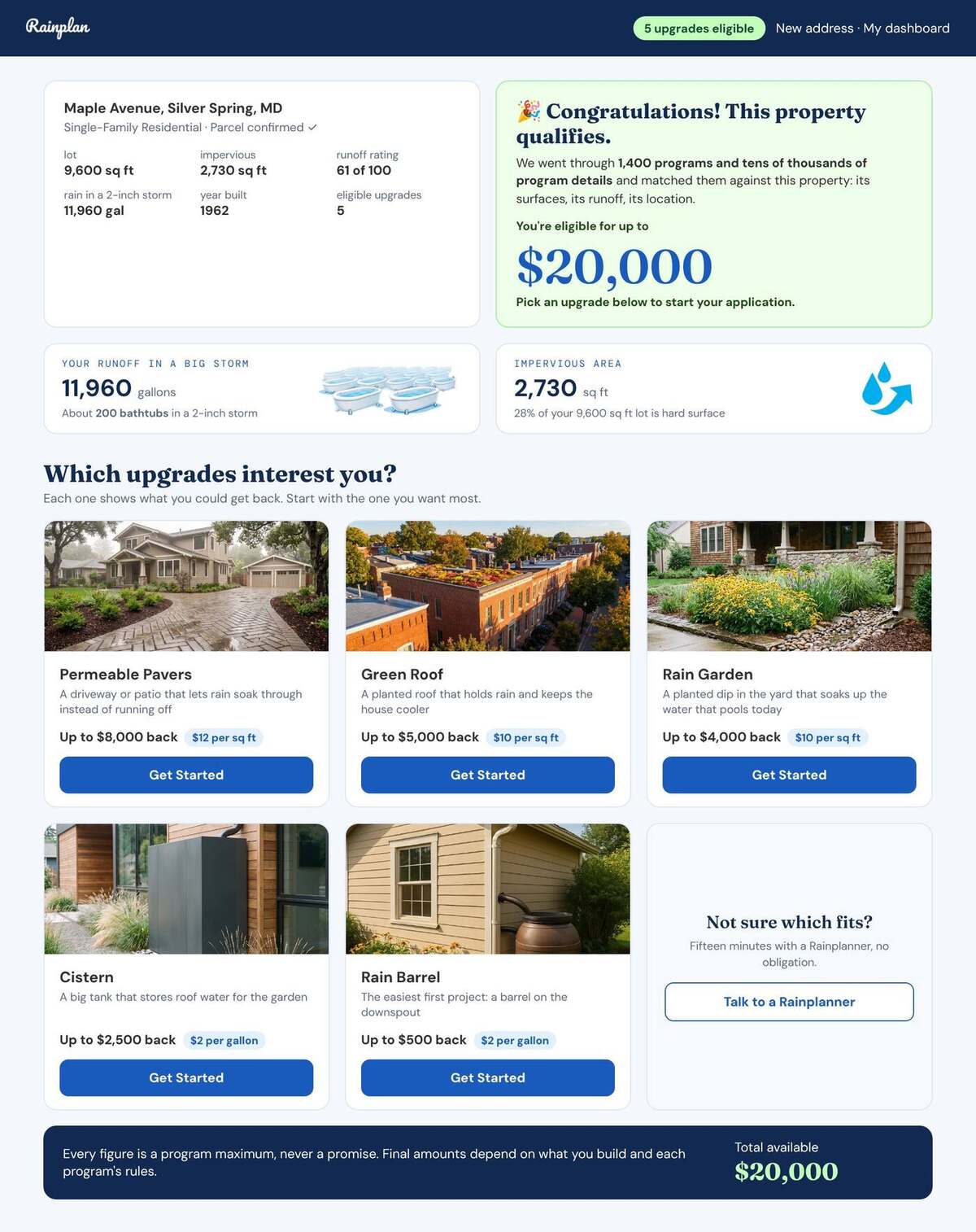
Fair. Type the address. Every upgrade your property may qualify for shows up with what the program pays, in seconds.


What we did, and what they said.

Rainplan claimed the $3,240 rebate, matched the installer and sponsored the build, with oversight through completion.

Rainplan ran the whole project with Lucia: the feasibility work, the technical hurdles a green roof brings, the rebate claims for both upgrades, the contractors and the oversight through to completion. Project Sponsorship and Assurance, start to finish.

Rainplan found the program and handled the claim. The rebate covered most of the project.
Two kinds of programs, one result: local money set aside every year for upgrades like yours.
Every roof and driveway sends rain into the storm system. Counties and cities pay you to soak it up at home with permeable paving, rain gardens, barrels and green roofs, because that is cheaper than new infrastructure.
Water utilities pay you to take out thirsty grass and plant for your climate, because every gallon you don't use is a gallon they don't have to buy.
The money is budgeted every year. What stops people is the application. That is the part we do.

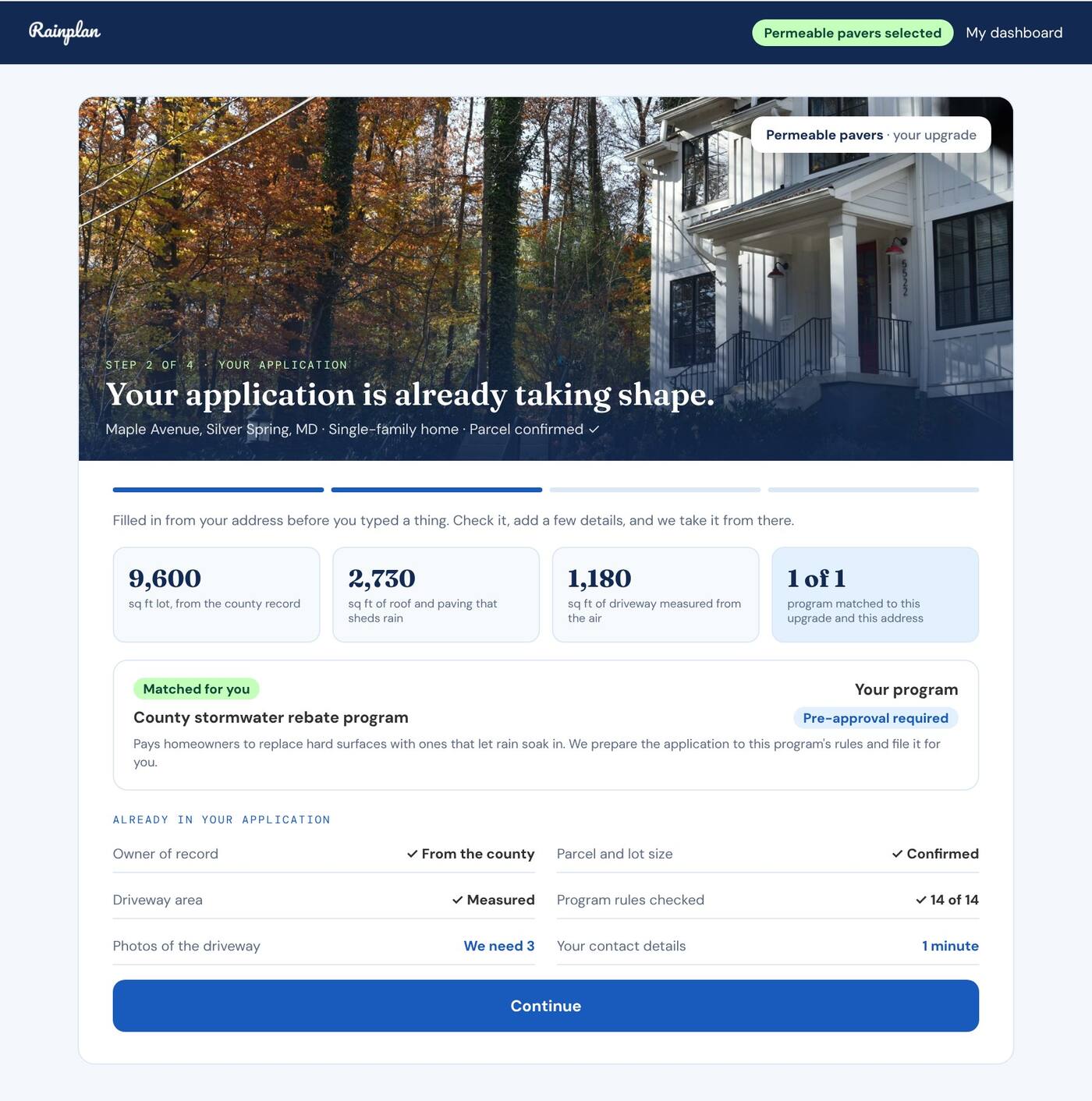
Programs turn people down for small things: the wrong order of steps, a missing photo, a material that is not on the list. We build your incentive file and apply to the program's rules, then handle every question until you're approved.
Already have a contractor and a quote? The claim on its own is all you need.

Water pooling by the garage, a lawn you want gone, a roof you want planted. We measure your property from the air, lay out the fix to the program's rules and put a fair price range on it, so every contractor bids on the same plan. Your contractor still confirms the final design and price.
No rebate at your address? The plan on its own is $100.
Sample data. Bids are shown as submitted. The rebate is paid to you by the program, not taken off the bid.
We can send your plan to contractors in the Provider Network. They know the programs and bid on a clearly defined scope, so every bid prices the same project. You see them side by side and choose. No site visits to schedule, no chasing quotes.

When upfront costs hold up your project, Rainplan can fund the build, pay the contractor as work is approved and oversee the job through inspection. Then you pay, in one payment or monthly. If a rebate is coming, it goes toward what you owe.

Apartment buildings, shopping centers, churches, schools and whole portfolios. We screen every property, rank the opportunities, run the claims, and can fund the build when capital is the obstacle.
Every property ranked by what it can claim, so you start with the biggest.
The same flat-fee claim as residential, priced for portfolios.
Lots and roofs done this season, paid for once they pass inspection.

Projects arrive as a Project Opportunity Notice with measured areas, photos, program requirements and a target price. $0 to join, $0 to bid, a fee only when the customer signs with you. On sponsored projects Rainplan pays you directly as work is approved.

Coming soon: the rebate shown on your product page by address, with the claim handled by us. Your products will be specified in the plans contractors bid on, with demand data on where programs are paying.

Pre-qualification of property owners with a property card built to your rules. Data insights on who is searching and signing up, by parcel. Project sponsorship that turns interest into built projects.
Yes. Every service stands on its own, with its own price. Most people start with the Rebate Claim and Scope and Solution Design together for $150, and add bids or sponsorship as the project moves.
No. Checking what your property qualifies for costs nothing. You pay only for what you choose, and the price is shown before you start: $150 for the Rebate Claim and Scope and Solution Design together, or $100 for the claim alone. If your address has no rebate, the plan on its own is $100.
Your city, county or water utility. Every roof and driveway sends rain into the storm system, and every lawn drinks water the utility has to buy. Paying you to fix it at home is cheaper than building bigger pipes or buying more water, so the money is budgeted every year. Most of it goes unclaimed because the application is the hard part.
We charge for rebate claims and project plans. Contractors in our Provider Network pay us when they win a project. Project Sponsorship has its own charge, stated in writing before work begins. Never a percentage of your rebate.
No. No cash lands in your account. Rainplan pays your contractor directly for approved work, oversees the job through inspection, and you pay Rainplan back once it has passed, in one payment or on a monthly plan. Your rebate reduces what you owe.
Yes to both. We claim and manage the rebate either way.
Across the United States. We track programs in all 50 states and Washington, DC. If your address has no program today, we tell you that too.
Instant results. No cost to look.
Questions first? Talk to a Rainplanner.